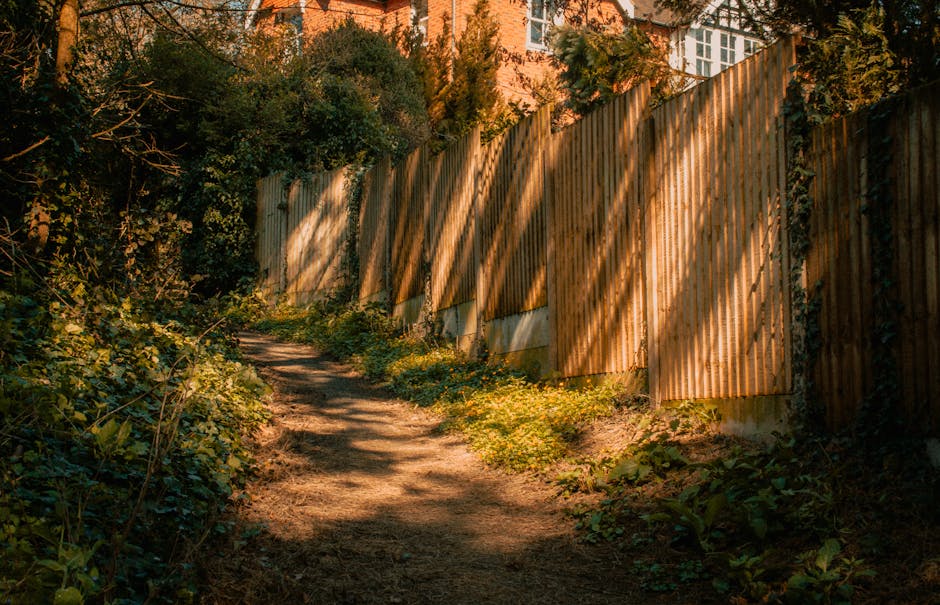
Ilford garden services narrow drive access solutions
If you have ever looked at your side return, shared driveway, or compact front access and thought, "How on earth are they getting a mower, tools, and waste out there?", you are not alone. Ilford garden services narrow drive access solutions are designed for exactly this kind of job: getting professional garden work done safely and neatly where access is tight, awkward, or limited by gates, parked cars, steep steps, or a squeeze of a pathway. It sounds simple, but in practice it takes planning, the right equipment, and a bit of local know-how.
Whether you are dealing with regular upkeep, a one-off clearance, or a larger landscaping project, narrow access changes almost everything. It affects the way materials are carried in, how waste is removed, what equipment can be used, and how long the job takes. In this guide, we'll break down what narrow access solutions involve, why they matter in Ilford homes and gardens, and how to choose an approach that is practical rather than painful. A lot of this comes down to making the job easier before anyone even arrives. That part matters more than people think.
For a broader view of the types of work these access arrangements often support, you may also find the site's services overview helpful, along with pages such as garden maintenance, garden clearance, and landscaping.
Table of Contents
- Why narrow drive access matters
- How narrow drive access solutions work
- Key benefits and practical advantages
- Who this is for and when it makes sense
- Step-by-step guidance
- Expert tips for better results
- Common mistakes to avoid
- Tools, resources and recommendations
- Law, compliance, standards, or best practice
- Options, methods, or comparison table
- Case study or real-world example
- Practical checklist
- Conclusion
- Frequently asked questions
Why Ilford garden services narrow drive access solutions Matters
Narrow access is not just an inconvenience. It can shape the whole outcome of a garden job. In a typical Ilford street, you may have terraced housing, side passages, compact rear access, shared driveways, tight corners, or a gate that looks generous until you try to pass a wheelbarrow through it. The smaller the access, the more careful the planning needs to be. If you get that wrong, the work can become slower, messier, and more expensive than it should be.
Garden work relies on flow. Tools need to move in. Waste needs to move out. Materials like topsoil, timber, paving, bark, or turf need somewhere to go without damaging fences, walls, doors, or plants. Narrow drive access solutions help prevent that familiar scenario where everything ends up being passed hand-to-hand across the garden in the rain. Not ideal. Not fun. And definitely not efficient.
In practical terms, good access planning can mean the difference between a smooth morning and a job that drags into late afternoon. It also helps protect the property. Tight routes can be rough on lawns, edging, paths, and gate furniture. A sensible setup reduces wear and tear, keeps the work area tidier, and gives the gardener more room to do the job properly.
Expert summary: narrow access work is mostly about preparation. The better the route, the cleaner the finish, and the less the team has to improvise on the day.
If the space is especially awkward, it may also influence which services are realistic in one visit. For example, a full clearance may be better handled with a staged plan, while hedge trimming or lawn mowing can often be completed with lighter equipment and a simpler access arrangement.
How Ilford garden services narrow drive access solutions Works
The process usually starts with a simple question: what can actually get through the access point? That means measuring gates, side passages, corners, steps, and any pinch points along the route. It also means checking surface type. A narrow route over loose gravel behaves very differently from a flat concrete path or a set of old slabs that wobble a bit under load.
From there, the work is adapted to fit the access, rather than forcing the access to fit the work. That might involve using smaller tools, breaking materials into manageable sections, carrying waste in bags rather than bulk bins, or using protective coverings to reduce damage. Sometimes a job benefits from a two-person crew. Sometimes it needs a staggered delivery. Occasionally the best solution is simply to remove obstacles first, which is where garden clearance becomes part of the access plan rather than a separate task.
It is worth saying that good access planning is often invisible when done well. You do not notice the route because nothing goes wrong. The gate opens, the tools come in, the waste goes out, and the garden is left tidy. That is the goal. Nice and boring. Boring is good here.
In many cases, narrow access is supported by a combination of:
- site measurements and a quick visual survey
- lighter, compact, or hand-carried equipment
- careful sequencing of tasks
- temporary protection for pathways and gates
- extra time for loading, carrying, and waste removal
If the job is part of a bigger outdoor redesign, access planning may be tied to landscape gardening or structural work such as decking services, where delivery routes and on-site movement matter from day one.
Key Benefits and Practical Advantages
The main benefit is simple: the job can be done safely and properly without turning your garden into a bottleneck. But the practical advantages run deeper than that.
- Less disruption: tight access work is planned around your property, so there is less dragging, bumping, and back-and-forth.
- Better protection: paths, turf, borders, and fences are less likely to be damaged when the route is thought through first.
- Cleaner results: controlled movement usually means cleaner waste removal and less debris left behind.
- More realistic scheduling: once access is understood, the time estimate becomes more honest and useful.
- Safer working: narrow spaces can create trip hazards and awkward lifting. Good planning reduces both.
There is also a confidence benefit. If you have ever worried that a contractor might arrive with the wrong kit and spend half the day working it out, you will appreciate this one. A team that understands narrow drive access tends to ask the right questions early. How wide is the gate? Is there a step? Can they access the rear from the front? Can waste be taken out in stages? Those questions sound minor, but they are usually the difference between a tidy service and a stressful one.
For ongoing upkeep, pairing access-friendly planning with regular visits can be a very sensible approach. Services like garden maintenance and lawn mowing are often easier to manage when the route in and out is stable, predictable, and kept clear.
Who This Is For and When It Makes Sense
Narrow access solutions make sense for any property where the entrance route limits normal garden work. In Ilford, that often includes terraced houses, compact semis, homes with shared side access, and properties where parked cars or bins regularly narrow the route even further. If you have ever thought, "This would be easy if we only had another metre," then yes, this is probably for you.
It is especially useful if you are dealing with:
- overgrown gardens with limited rear access
- heavy or awkward waste to remove
- works involving timber, paving, soil, or planting materials
- regular maintenance in a tight courtyard or side return
- jobs where the only route is through the house front or side passage
It also matters for people who simply want less stress. You do not have to be tackling a major landscape project to benefit from this approach. Even a fairly small job can become awkward if the access is tight and the route is cluttered. A hedge cutback, for instance, might be straightforward in theory but fiddly in practice when clippings have to be bagged and moved through a narrow path.
Sometimes the best decision is to do a smaller scope first. A garden that feels out of control may need a staged service, beginning with garden clearance and then moving into regular upkeep. That is often the calmer way, truth be told.
Step-by-Step Guidance
If you are planning garden work with narrow drive access, this is a sensible order to follow.
- Measure the access properly. Check gate width, passage width, height restrictions, and any turning points. Do not guess. A tape measure is far cheaper than a wasted visit.
- Identify the route in and out. Decide where tools, materials, and waste will travel. If there are multiple options, choose the least disruptive one.
- Clear the access path first. Move bikes, bins, pots, furniture, and anything that could snag. Small objects cause big annoyances.
- Match the equipment to the route. Compact tools, hand-carry methods, and lighter loads can make the whole job smoother.
- Protect surfaces where needed. Use covers or boards where there is a risk of scuffing, sinking, or staining.
- Break the work into stages. Cutting, collecting, loading, and final tidy-up can happen in sequence rather than all at once.
- Plan waste removal early. Decide how cuttings, soil, branches, and offcuts will leave the site. That part is often underestimated.
- Review the finish. Once the job is complete, walk the route again and check for debris, marks, or any minor damage that needs attention.
A quick real-world note: the first time a team walks a route, they may notice things you have stopped seeing. A loose slab. A latch that sticks. A corner that catches wide items. Nothing dramatic. Just the sort of detail that quietly eats time if nobody spots it early.
Expert Tips for Better Results
Good narrow access work is a mixture of common sense and tidy habits. Not glamorous, but it works.
- Keep the route as dry and clear as possible. Wet leaves, mud, and overfilled bags all make narrow spaces harder to manage.
- Ask for a pre-visit check if the job is complex. It helps avoid surprises, especially with larger clearances or materials-heavy work.
- Think about seasonality. In spring and early summer, growth can make routes feel tighter than they looked in winter. That's just how it goes.
- Bundle related tasks together. If you are already arranging access for hedge work, it may be efficient to schedule lawn care or general tidying at the same time.
- Be honest about obstacles. If there is a locked gate, a steep step, or a delicate surface, say so early. It saves time and keeps everyone calmer.
Another useful habit is to keep access maintenance in mind year-round. Trimming back growth near a gate, keeping paths free of clutter, and not letting tools pile up near the entrance all make future visits smoother. A small bit of housekeeping now can save a proper headache later. Simple, really.
For property owners who like a more considered approach to outdoor improvement, the broader service pages for landscaping and about us can help you understand the sort of work ethic and service style that supports careful access planning.
Common Mistakes to Avoid
Most access problems are predictable. That is the frustrating bit. The good news is they are avoidable.
- Measuring the gate but not the route. A wide gate means very little if the next corner is too tight.
- Leaving the access area cluttered. Tools, toys, planters, and parked items all become friction points.
- Underestimating waste volume. Green waste often looks smaller before it is cut, bagged, and stacked. Then suddenly it isn't.
- Using heavy equipment where lighter kit would do. Sometimes the elegant solution is the quieter one.
- Ignoring surface protection. A narrow route can become a damaged route fast if wheels or boots keep rubbing the same point.
- Leaving trimming and clearance until the access is already blocked. That leads to a circular problem where the very thing you need to remove is also blocking the route.
One more thing, and this catches people out more often than you would expect: not all narrow access is physically narrow. Sometimes it is psychologically narrow, if that makes sense. The route is technically wide enough, but the slope, the bend, or the fragile surface makes it feel cramped. In those cases, the method matters as much as the measurements.
Tools, Resources and Recommendations
You do not need specialist jargon to make good decisions here. You just need the right questions and a few practical checks.
Useful tools and resources for planning include:
- a tape measure for gate and passage widths
- a notepad or phone notes for obstacle lists
- a quick photo set of the access route
- a simple sketch of the garden layout if the route is unusual
- a clear list of items that must be moved before work starts
On the service side, it can help to review the provider's approach to safety and working practices. The pages for health and safety policy, insurance and safety, and payment and security are useful for understanding how a professional outfit thinks about risk, workmanship, and process.
If sustainability matters to you, narrow access planning can also reduce unnecessary trips, excess waste handling, and surface damage. That sits neatly alongside a sensible recycling and sustainability approach, especially for green waste and reusable materials.
And if you want to compare costs or ask for a tailored estimate, the site's pricing and quotes page is a sensible next stop. No drama, just clarity.
Law, Compliance, Standards, or Best Practice
This topic is mostly about safe working practice rather than heavy regulation, but there are still important standards of care. In the UK, anyone carrying out garden work should think carefully about safe access, manual handling, trip hazards, and damage prevention. That is especially true where workers, residents, pets, or neighbours may pass through the same areas.
Best practice usually includes:
- avoiding unsafe lifting and carrying methods
- keeping routes clear and visible
- using tools that suit the space rather than forcing oversized kit through it
- protecting property where contact is likely
- making sure the plan is realistic before work begins
If waste is being removed, it should be handled responsibly, and if materials are being loaded or transported, the work should be done in a way that avoids unnecessary mess or hazard. Exact legal duties can vary depending on the job, the property, and the circumstances, so it is sensible to discuss concerns directly before work starts. If you have particular access issues, disability access needs, or shared property arrangements, those should be discussed openly and early.
For transparency around business practices and customer care, pages such as terms and conditions, complaints procedure, and accessibility statement can also be useful. They help set expectations. That is underrated, honestly.
Options, Methods, or Comparison Table
There is no single best access method for every garden. The right choice depends on space, surface, weight, and how much work needs to be moved in and out. Here is a straightforward comparison.
| Method | Best for | Strengths | Limitations |
|---|---|---|---|
| Hand-carry access | Very narrow routes, small jobs, light waste | Flexible, low impact, easy to adapt | Slower for larger volumes |
| Compact tools and equipment | Regular maintenance, trimming, light clearing | Efficient and less intrusive | May not suit heavy landscaping work |
| Staged delivery and removal | Projects with materials or waste to move in phases | Keeps routes clearer, reduces congestion | Needs more planning and coordination |
| Pre-clearance first approach | Overgrown or cluttered gardens | Improves visibility and working space | May add an initial step before main works |
| Mixed method | Most real-world garden jobs in tight spaces | Balances speed, safety, and flexibility | Depends on a good initial assessment |
For many homes, the mixed method is the winner. A bit of hand-carry, a bit of compact kit, a bit of staging. Not particularly glamorous, but very effective.
Case Study or Real-World Example
Picture a typical Ilford terrace with a narrow passage to the rear garden. The gate opens fully, but the passage has a tight corner halfway along and the slabs are slightly uneven. The garden itself needs hedge cutting, border clearing, and removal of old plant waste. Nothing dramatic, but awkward enough to matter.
Rather than trying to do everything in one continuous sweep, the work is broken into smaller phases. First, the access route is cleared and checked. Then the hedge cuttings are collected in manageable loads. Heavy waste is bagged in smaller batches. The narrow corner is treated carefully so nobody has to twist or force a wheelbarrow through it. Final tidy-up happens only after the route is clear again.
The result is not just a neater garden. It is a calmer job overall. Less strain. Less clutter. Fewer risky manoeuvres. And if there is a next visit, the team already knows what to expect. That matters. A lot.
In practice, this kind of planning works especially well alongside ongoing services such as hedge trimming and regular garden maintenance, because the route stays familiar and the garden does not get a chance to turn into a jungle between visits.
Practical Checklist
Use this quick checklist before booking or beginning work on a narrow-access garden.
- Measure gates, passages, steps, and turns.
- Photograph the route from front to back.
- Clear bins, bikes, furniture, and loose items.
- Tell the team about awkward latches, slopes, or fragile surfaces.
- Confirm whether waste will be bagged, loaded, or removed in stages.
- Ask what equipment is likely to be used.
- Discuss whether the job needs a pre-clearance first.
- Check whether nearby work, like tree work or landscaping, changes the access plan.
- Confirm how surfaces will be protected.
- Agree what a tidy finish looks like before the work starts.
If you want a fuller picture of related services that may interact with access planning, tree lopping and removal and landscape gardening are good examples of jobs where route planning can be just as important as the work itself.
Get a free quote today and see how much you can save.
Conclusion
Ilford garden services narrow drive access solutions are really about making tricky spaces workable. When access is tight, good planning protects the property, improves efficiency, and gives you a better final result without unnecessary hassle. It is one of those behind-the-scenes details that can quietly make or break a garden job.
The best outcome usually comes from being upfront about the access, choosing methods that suit the route, and combining the right services in a sensible order. That might mean a clear-out before maintenance, lighter kit instead of heavy kit, or a phased plan rather than a rush job. None of that is flashy. It just works.
If you are at the stage of comparing options, asking questions, or simply trying to understand what is realistic for your property, that is a good place to be. Clear planning almost always leads to calmer work and a better finish. And honestly, in a narrow driveway or tight side passage, calm is worth a lot.
Sometimes the smartest garden solution is the one that makes the whole space easier to live with, not just easier to work on.
Frequently Asked Questions
What are narrow drive access solutions in garden services?
They are practical methods used to complete garden work where gates, driveways, side passages, or rear access points are too tight for standard movement. The aim is to get tools, materials, and waste in and out safely without damaging the property.
Why do narrow access gardens need special planning?
Because access affects almost every part of the job. If the route is tight, the team may need smaller equipment, slower movement, extra protection for surfaces, or a staged approach to waste removal. Without planning, the work can become slow and messy.
Can a garden still be cleared if the access is very narrow?
Usually yes, though the method may need to change. Small loads, bagged waste, compact tools, and phased work can make even awkward access manageable. In some cases, a pre-clearance is the best first step.
Do narrow access jobs take longer?
Often they do, because everything takes a little more care. Carrying waste, moving materials, and protecting surfaces usually adds time. That said, good planning can keep the delay modest and predictable.
What should I measure before booking garden work?
Measure gate width, passage width, any tight corners, step heights, and the route from the front to the garden. If possible, take photos too. They help the team understand the job before arriving.
What kinds of garden work are most affected by narrow access?
Clearances, landscaping, tree work, heavy planting, and jobs involving turf, timber, soil, or large amounts of green waste are usually the most affected. Regular maintenance can also be affected if the access is especially awkward.
How can I make access easier before a visit?
Clear the route, move bins and furniture, unlock gates, and tell the team about any slope, loose slabs, or fragile areas. Even small changes can make the work noticeably smoother.
Is narrow access a problem for hedge trimming or lawn care?
Not always, but it can influence how the job is done. Lightweight equipment and sensible route planning usually solve most issues. For regular work, keeping the access route clear helps a lot.
Do I need to worry about damage to paths or fences?
It is sensible to think about it, yes. Narrow routes often mean more contact with edges, slabs, and fence lines. Good teams reduce that risk by using protection and choosing the right carrying method.
Should narrow access be discussed before a quote?
Absolutely. It helps the quote reflect the real effort required and avoids surprises on the day. If access is very restricted, a few photos and measurements can make the estimate much more accurate.
What if the access changes on the day because cars are parked differently?
That can cause delays, so it is best to keep the route consistent if possible. If the access is shared, let the team know in advance and try to leave the passage clear for the agreed time window.
Where do I go next if I want a tailored garden service?
Start with the service details that best match your job, then check the provider's pricing, safety, and process information. If you are still unsure, use the contact page to explain the access situation clearly and ask for guidance before booking.